What the Super Bowl Can Teach Us About AI
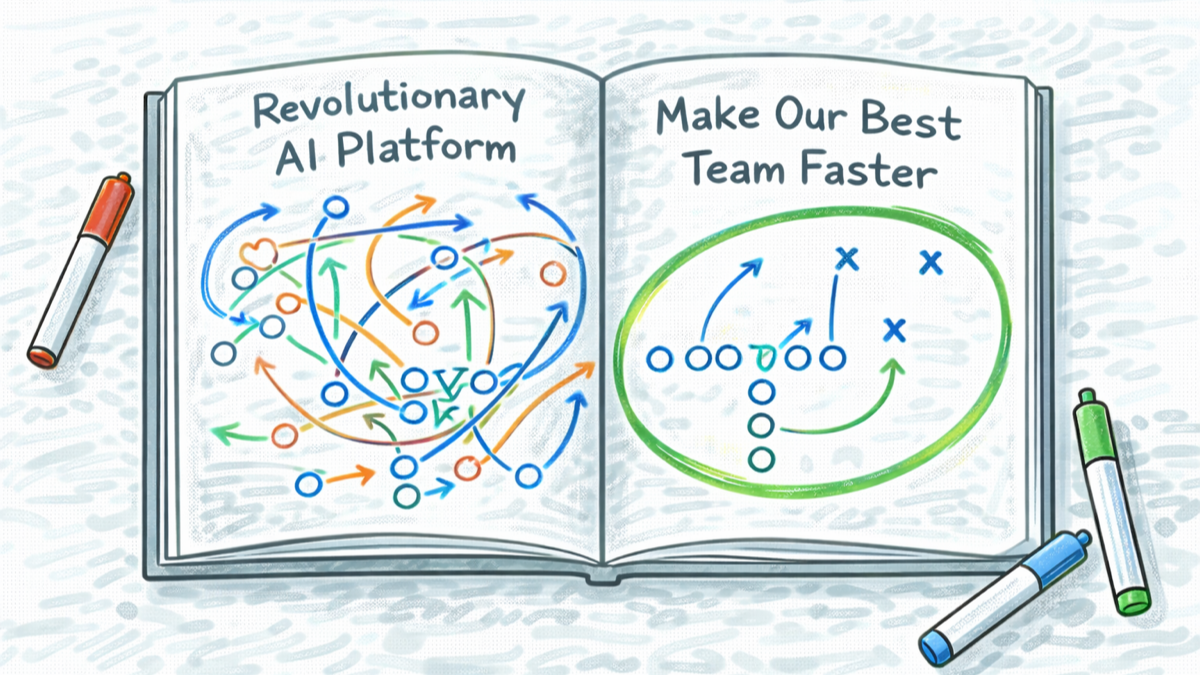
Every February, the Super Bowl shows up with the same promise. This year will be bigger. Smarter. Faster. Revolutionary.
And every February, it quietly reminds us of something else too.
Most of what we are watching will not age well.
Think about the ads. Over the years we have seen dot-com darlings, crypto exchanges, delivery startups, metaverse dreams, and once in a while a company whose name you genuinely cannot remember a year later. At the time, they all felt inevitable. Unstoppable. Everywhere.
AI is in that exact Super Bowl phase right now.
The ads are everywhere. The promises are enormous. The urgency is dialed to eleven. And a lot of people are sitting on the couch thinking, “Am I already behind?”
Probably not.
We Have Seen This Movie Before
(Dot-com). (Crypto). AI.
Different jerseys, same game.
There will be lots of hype. There will be breathtaking demos that never quite translate into daily work. There will be companies making bold claims who simply will not exist in their current form a few years from now.
That does not mean the technology is fake. It means the cycle is real.
One of the most grounded observations about this came from Bill Gates, who said we tend to overestimate what technology can do in one year and underestimate what it can do in ten.
That line survives every hype wave because it keeps being true.
AI is not magic. It is not a silver bullet. It is also not a fad that disappears after the confetti gets swept up. The trick is knowing how to play the long game without getting trampled in the short one.
Your AI Game Plan, Football Edition
You do not win a Super Bowl by running trick plays on every down. You win by reading the field, playing to your strengths, and getting the whole team involved.
AI works the same way.
**First, read the field. **Understand what is happening, who is doing what, and where the real opportunities might be. But do not confuse awareness with obligation. You do not have to jump into every tool, platform, or trend just because everyone else is yelling about it.
**Second, play to your strengths. **Look at what your team already does well. Sales, marketing, operations, finance, customer support. Pick one area where you already have momentum and ask a simple question. Where could AI remove friction, speed things up, or make good people even better at their jobs? The teams that win are not reinventing themselves overnight. They are compounding what already works.
**Third, use your entire team. **AI cannot be a secret weapon locked in an executive suite or owned by one “AI person.” The real advantage shows up when teams know how to experiment safely, share what works, and learn together. Curiosity beats fear every time.
**Fourth, remember that innovation wins. **Not because every experiment succeeds, but because the act of trying builds muscle. Give your team a safe place to test ideas, prototype workflows, and move beyond the chatbot phase. AI becomes valuable when it fits into how work actually gets done, not when it lives in a demo.
Ready for the Big Game
You do not need to chase hype. You do not need to rebuild your company around buzzwords. You do need a plan that is practical, grounded, and designed to grow over time.
That is where a tryout makes sense.
Keel3 exists for teams who want to move from curiosity to capability without getting lost in noise. Think of it as bringing in a coach who has watched a lot of seasons, blown a few plays, learned from it, and still believes this game is worth playing.
The Super Bowl will end. The ads will fade. AI will still be here, quietly reshaping how work gets done.
The teams that win are not the loudest. They are the ones who prepared before kickoff and kept adjusting after halftime.