The Handoff is Dead
Lee Mikles - Keel3.ai
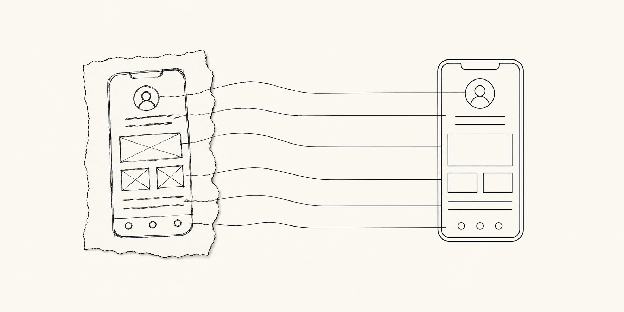
For over thirty years, the gap between what a creative imagined and what got built was someone else's job to cross. That gap is closing, and creatives should embrace the change.
Patrick sent me a link this week about Google Pics, Google's new AI image tool for businesses making marketing material. The Verge framed it as a shot at Canva, though Patrick’s reaction had nothing to do with the product itself. Patrick made the point that Google should be actively courting the creative industry.
But instead of leaning in on partnerships with schools like SCAD (I’m based in Savannah) to bring creatives into the AI transformation, the part of the creative industry that Google, and everybody else, keeps trying to reassure is the part that's actually already gone.
I think the creative industry has an opportunity to be the key driver in development, not just of creative designs, but of total solutions–directing AI to build to their specifications. No longer is a creative person confined to only creating a design or flow that is implemented by others; with AI, classically trained creatives can communicate how something should function, and AI can help build it. The gap between the creative and the finished product can be collapsed.
In the coverage around Google Pics, they keep using an image of a poster for a neighborhood street fair. The idea is with Google Pics, everybody can make their own posters – no more need for creatives. And this, understandably, causes a wave of anxiety in the creative community (of which I am a proud member!) But honestly – what do you figure a neighborhood organization would pay for a poster like that? My guess is three hundred dollars, and that's being generous. Realistically it gets made by somebody who does it as a passion project, at night, because they live in the neighborhood. $300 for a poster isn’t going to sustain a career. That’s the work these tools erase. The bottom rung of creative labor, the stuff that never paid well, if it paid at all.
I'm not going to pretend that it's painless. It was a rung I was on early in my career (Click here to see the poster I made in college to celebrate my favorite pastime that somehow got bought, commercialized, and showed me I was more an entrepreneur than a creative). It's how a lot of people got their first client, their first portfolio piece, their first reason to call themselves a designer. Losing an entry point is a real loss and people are right to be angry about it.
But I don't think defending this kind of work against the AI tidal wave is what we in the creative industry should be spending this moment on. There's a much bigger thing happening.
For most of my career, in the (mostly friendly) battle between designers and developers, the road from idea to working software ran through developers, because building it was specialized, difficult work.
Patrick and I ran a 70 person interactive agency, The Archer Group, for years, and I watched this disconnect play out twice.
The first time was when we worked with traditional creatives arriving on the web with everything they knew from print. Fixed layouts. Pixel-perfect comps. Absolute control of a canvas, because in print the canvas holds still. Then the web showed up and the page stopped behaving like a page. It reflowed, it broke, it rendered differently on every machine, and the conventions that had been perfected over a century of print were suddenly the wrong instincts. These were genuinely great designers but the medium had just moved out from under them, and the tools of the new medium belonged to somebody else. Some figured it out. Some decided they didn’t want to.
The second time I saw this happen was worse, because it was structural. We had an army of designers, an army of developers, and a waterfall between them. Designers created the interface. Developers received the interface and tried to work out what it was supposed to do, what happened on hover, what happened at a different width, what happened when the data was ugly, which of these forty spacing decisions was intentional and which was somebody's hand slipping.
Enormous translation loss. Endless friction. And, honestly, mutual resentment. Developers saw creatives as a necessary evil handing them impossible drawings. Creatives saw their work being negotiated down to whatever was buildable under the budget. Nobody was the villain. The handoff between them was the problem, and we spent years and a lot of money building processes to manage it. At the time it was all we could do.
Today though, AI coding greatly reduces this issue.
That's what I see as the actual story here. When you can describe what you want and see it running, the gap that the handoff creates disappears. The creative doesn't need a translator. They express intent, they look at the result, they adjust. The loop that used to take three people and two weeks takes one person and an afternoon.
And contrary to the sky-is-falling accounts you read from creatives, I believe this shift actually favors them.
Creatives already know how to explain their design with words. That's a lot of the job. Pitching a concept, writing a brief, defending a direction to a client who asks ‘make the logo bigger’, articulating why the thing feels wrong before anybody can point at what's wrong. That skill was treated as soft for thirty years. It is now the interface to the machine that builds software. Developers are still critical to securing and deploying the software, but they no longer have to labor over understanding intent.
A creative used to be limited by the availability, patience, and priorities of a coder. Now they're only limited by their own creative ability and their ability to communicate it. That's a harder ceiling in some ways – but a much fairer one.
That’s why I think the opportunity for Google, or Adobe, or anybody serious about this, isn't a better image generator aimed at making $300 posters. It's moving creatives to the front of the development process and letting them lead user experience. The people who are going to do well out of this are the ones who stop asking whether the tools are coming for their job and start asking what they can now build without permission.
That's how we work most of what we do at Keel3 now, and the pattern is consistent: the person with the clearest picture of what should exist gets to build it.
Let’s stop asking for nicer tools for the tier of work that's disappearing anyway. It’s like defending the buggy whip. Let’s grab the car keys instead.