From Heads Down to Heads Up
Patrick Callahan - Keel3.ai
Over the past two years, I've worked with dozens of mid-sized companies investing heavily in AI. They're doing everything right on paper: buying enterprise licenses, hiring consultants, creating cross-functional task forces, sending teams to conferences. And yet without fail, a few months in, leaders find themselves back in the boardroom asking the same question: has anything really changed?
If this resonates, you're not alone. The challenge isn't buying the technology or licensing the must-have subscription services. It's figuring out how to help your people embrace and use it. And that's actually good news, because it means the solution is closer than you think.
The Adoption Gap No One Talks About
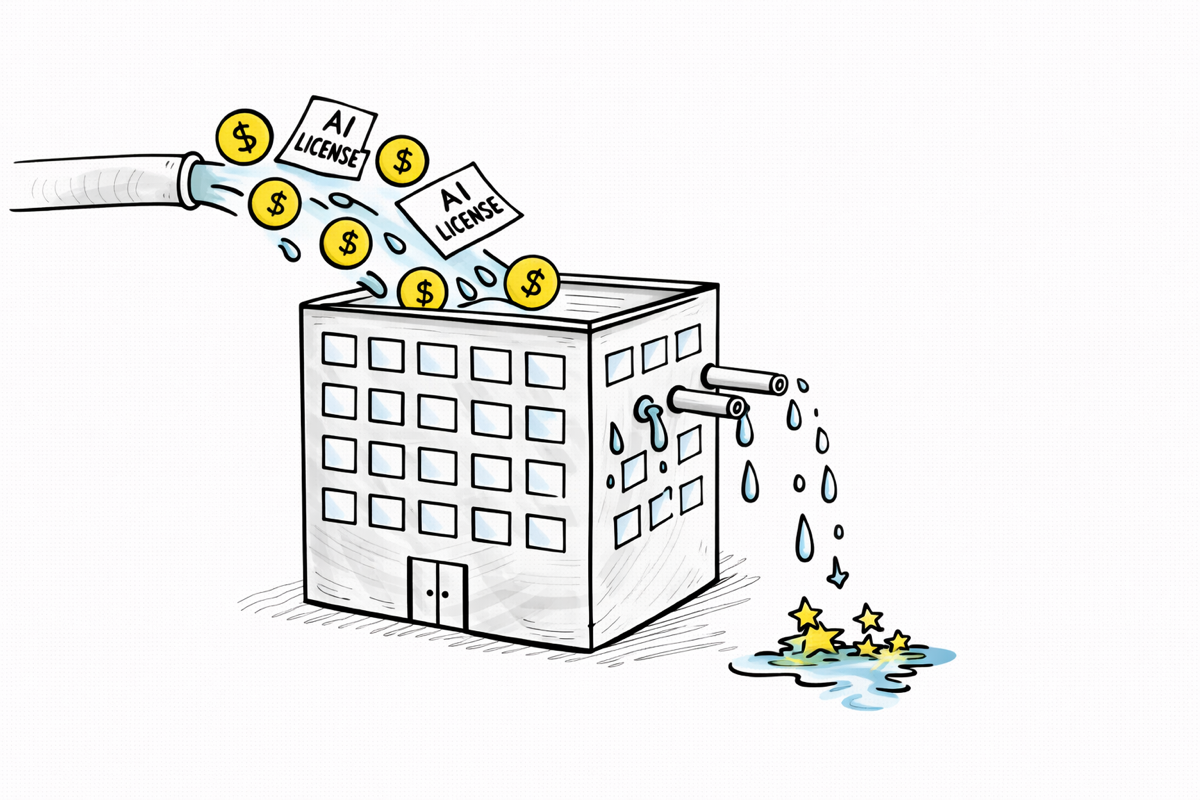
Let's look at what the research tells us. According to recent industry surveys, 78% of organizations are using AI tools. That sounds encouraging until you see the next data point: fewer than 1% report significant ROI (defined as a 20% or higher increase in profitability). MIT research found that 95% of AI projects within companies struggle to deliver meaningful results.
Here's what's interesting: despite these results, 91% of companies plan to increase their AI investment this year. It's understandable. When something isn't working, the instinct is often to try harder with the same approach: buy more tools, bring in more consultants, create more oversight. And no company wants to be left behind.
But what if the missing piece isn't more investment? What if it's a different kind of investment altogether?
Understanding Why Your Team Hesitates
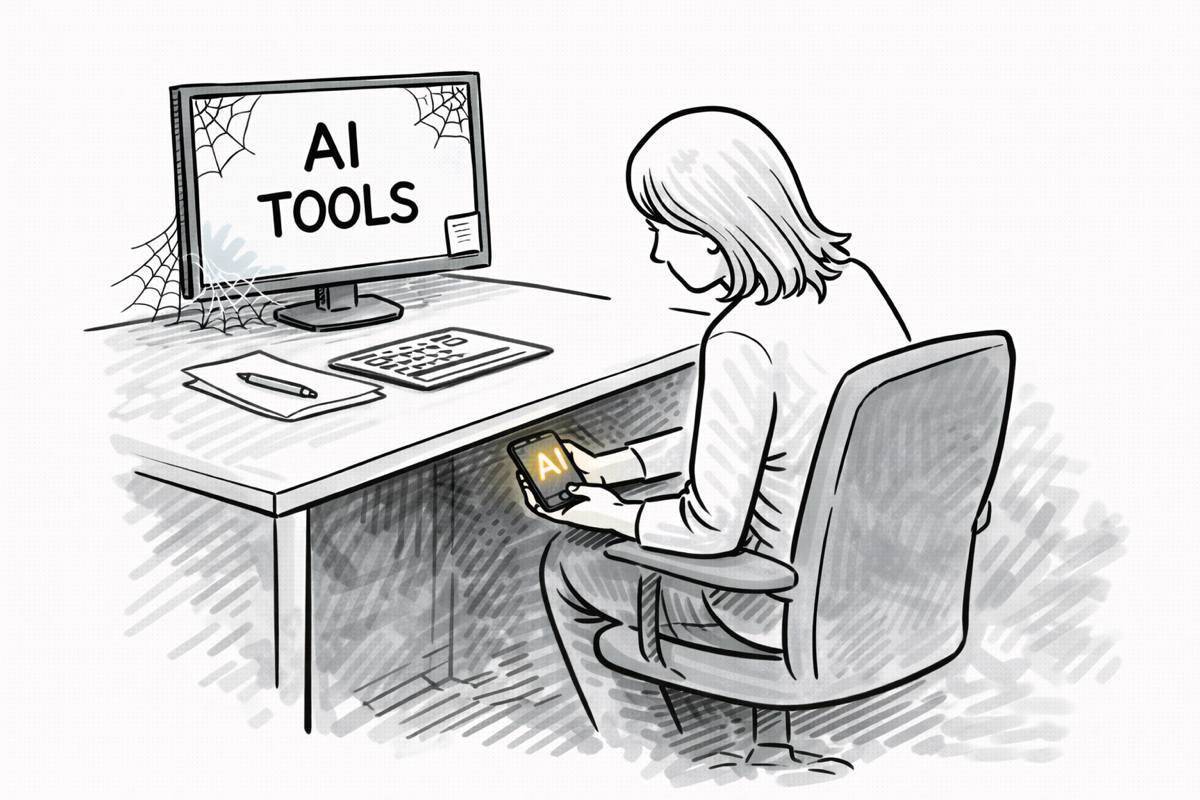
Here's where it gets revealing. While 91% of employees say their companies have AI tools available, 49% of workers report they 'never' actually use them. Even more telling: 78% of AI users are bringing their own tools to work, and 29% in the UK admit to using AI quietly, without officially acknowledging it.
Think about what this means. Nearly one-third of your team is experimenting with AI on their own, but they're not comfortable doing it openly.
The reason? One possible explanation is that for three years, the dominant narrative has been 'AI is coming for your job.' And while I don’t believe that’s an accurate prediction, the concern is very real. As The Wall Street Journal recently explained, when Goldman Sachs reported that 300 million jobs were 'exposed' to AI, most people heard 'eliminated.' It’s understandable they may not be eager to adopt tools they believe will land them on unemployment.
Another reason I’ve seen play out in the companies I work with is that without clear guidance, employees truly **don’t know how **to integrate AI into their workflows. Some employees are experimenters, or amateur AI enthusiasts. But plenty are just trying to do their jobs, and they’re not tech-curious. 40 years ago, if you plopped a computer on my desk, I may have turned it on and off a few times before returning to the safety of my typewriter. Employees need to hear from their leaders why and how the company wants to see AI used in the workplace.
Employees are also bombarded with contradictory messages. “We’ve bought you a Gemini subscription. You may NOT use ChatGPT. Please do not use AI for work related to client data or proprietary information. We want you to experiment and be innovative; look for ways to replace repetitive tasks with AI. Any improper use of AI is considered a violation of the company’s IT policy.” You can understand why an employee might retreat into the AI shadows – reluctant and confused about how to use the tools they’ve been given; relying on unauthorized tools they’ve taught themselves at home to gain efficiencies at work.
As the WSJ pointed out, workers don't need to be 'rescued from their professions.' They need space and support to adapt within their roles. That's the shift most companies haven't made yet.
The Opportunity: From Heads Down to Heads Up Work
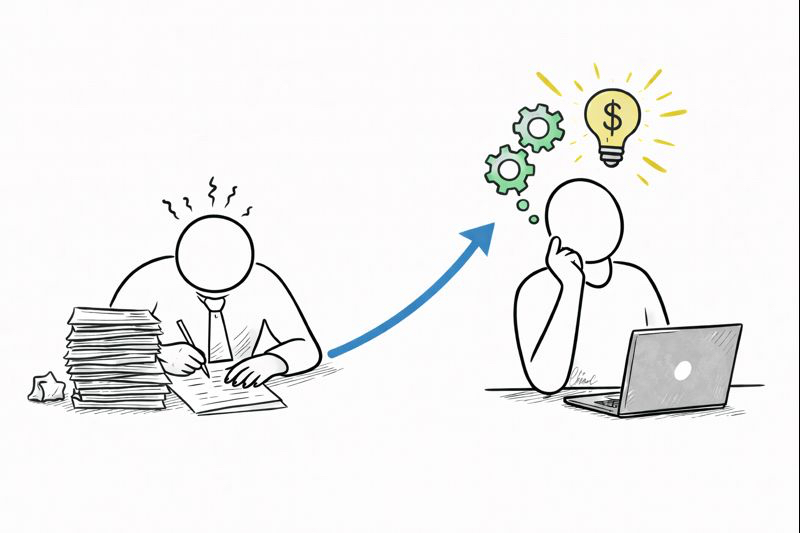
The companies seeing real results from AI have discovered something important: success comes from helping employees shift from 'heads down' work to 'heads up' work.
Heads down work is task execution. Processing invoices. Scheduling meetings. Drafting the same client email for the 47th time. Pulling data for reports. It's the repetitive, necessary work that keeps operations running but doesn't move the business forward strategically.
Heads up work is strategic. It's spotting patterns across customer complaints. Redesigning workflows. Identifying new market opportunities. Figuring out how to improve processes, not just executing them.
AI's real promise isn't replacing your employees. It's giving them time and headspace to think strategically instead of just executing tasks. But this transformation only happens when you approach AI as a strategy to develop your workforce,, not just a technology to implement.
The organizations seeing results aren't necessarily the ones with the biggest AI budgets. They're the ones who figured out how to engage the people who actually understand how work gets done.
How to Bridge the Gap: A Practical Playbook
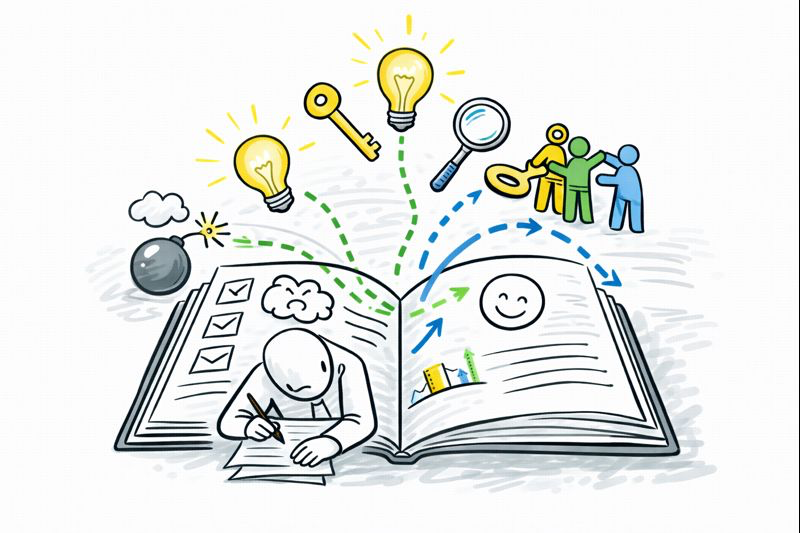
Many companies know they need to approach AI differently, but it's challenging to break from established patterns: top-down mandates, IT-owned initiatives, consultant-driven transformations.
Based on what we've seen work, here's a different approach.
Distribute Ownership Thoughtfully
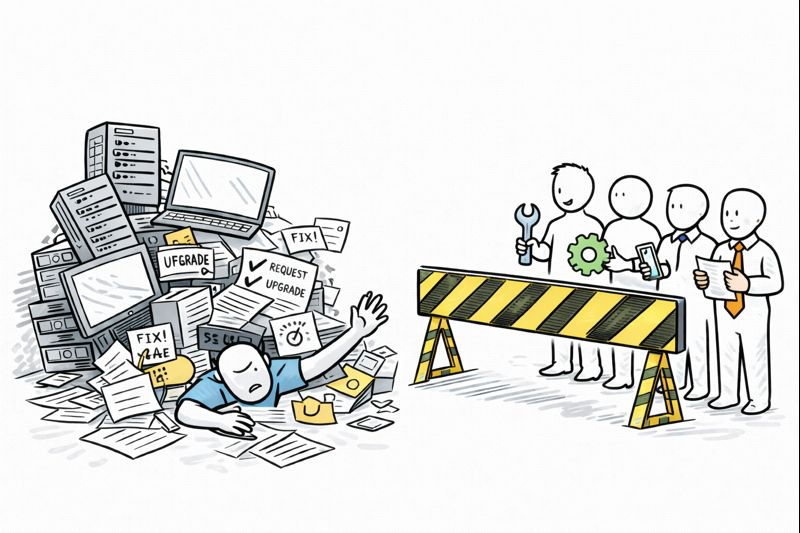
Your IT team is already managing a full plate: infrastructure, security, compliance, legacy systems. Adding 'lead AI transformation for the entire company' on top of that isn't realistic.
Instead, let IT do what they do best: run the infrastructure and set the guardrails. Security protocols, data governance, approved tools, integration standards. That's critical work. But the actual exploration and implementation? That's most effective when it happens in the teams closest to the work itself.
Identify enthusiastic people in different departments who want to explore AI. Give them permission and dedicated time. Your AI progress should only be limited by how many good ideas you have, not by IT's bandwidth.
Create Genuine Safe Spaces for Experimentation
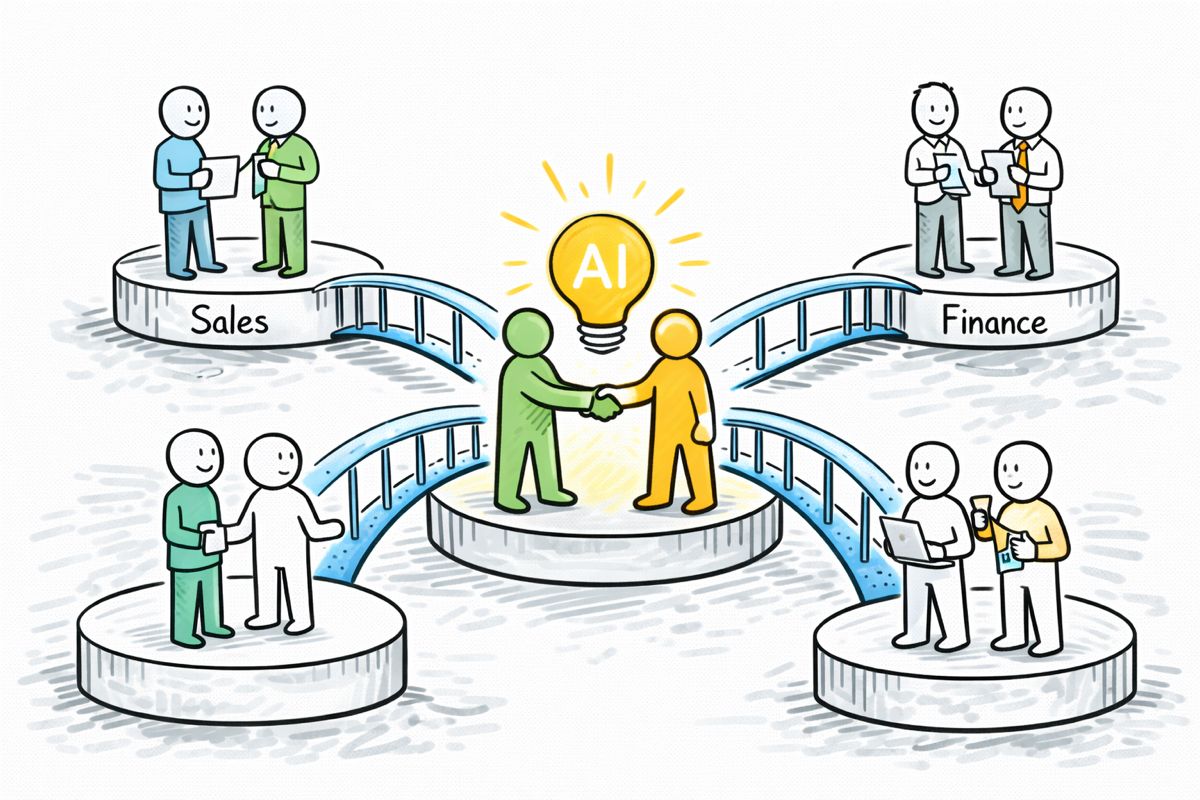
Remember: 29% of your employees are already exploring AI, but they're doing it quietly. They're not asking permission because they're unsure of the response, or they're concerned that admitting they need AI help might reflect poorly on their capabilities.
The goal is to flip this dynamic completely. Create explicit spaces where experimentation is expected and encouraged. These aren't theoretical 'innovation labs' separate from day-to-day work. These are protected spaces within actual departments where people can try things, learn from what doesn't work, and iterate quickly.
Set clear, supportive boundaries: 'Here's what you can experiment with freely. Here's what needs approval first. Here's who you can turn to when you get stuck.' Then trust them to explore.
Start with Quick Wins, Not Grand Visions
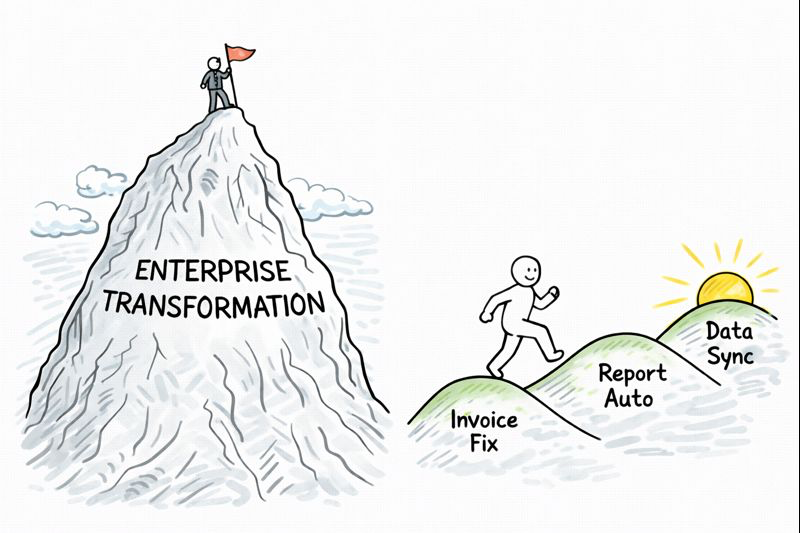
Large consulting firms often advocate for comprehensive enterprise transformation initiatives. That's understandable given their model. But meanwhile, your employees are spending two hours every week copying data from one system to another, and that frustration compounds daily.
Start by listening for the small, concrete problems people mention at lunch or in passing. The invoice process that takes three days when everyone knows it should take three hours. The client reporting that requires seven different exports and manual reconciliation. The onboarding checklist that everyone customizes because the official version doesn't quite work.
Pick 2-3 of these. Form small teams that include the people who actually do the work every day. Give them real support to see solutions all the way through. Despite all the talk about 'democratized AI,' actually connecting AI to your business systems and data is still complex and sometimes frustrating. A little experienced guidance goes a long way.
These early wins accomplish three important things:
-
They prove AI can solve real problems (not just theoretical ones)
-
They create enthusiastic advocates who can teach and inspire others
-
They reveal what actually works in your specific environment and culture
Flip the Script on Who Leads
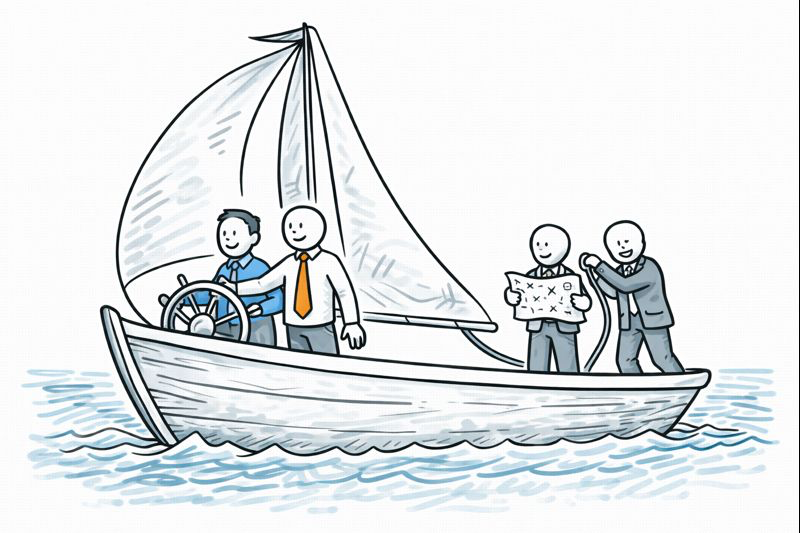
This might feel counterintuitive, but it's one of the most important shifts: let your employees be the primary voice in figuring out how AI can help. Not IT. Not senior leadership. Not consultants.
Why? Because your employees have knowledge no one else can match:
• Which processes are genuinely broken versus which ones just look inefficient from the outside
• Where the real daily frustrations live
• What customers actually complain about most often
• What workarounds people have quietly developed to get things done
• Which 'required' steps in official processes everyone finds ways to avoid
Consultants absolutely have value.hey can help with technical implementation, change management frameworks, and scaling what works. But they should support employee-led initiatives rather than driving them. The insights come from inside; the execution support can come from outside.
Track What Actually Reveals Transformation
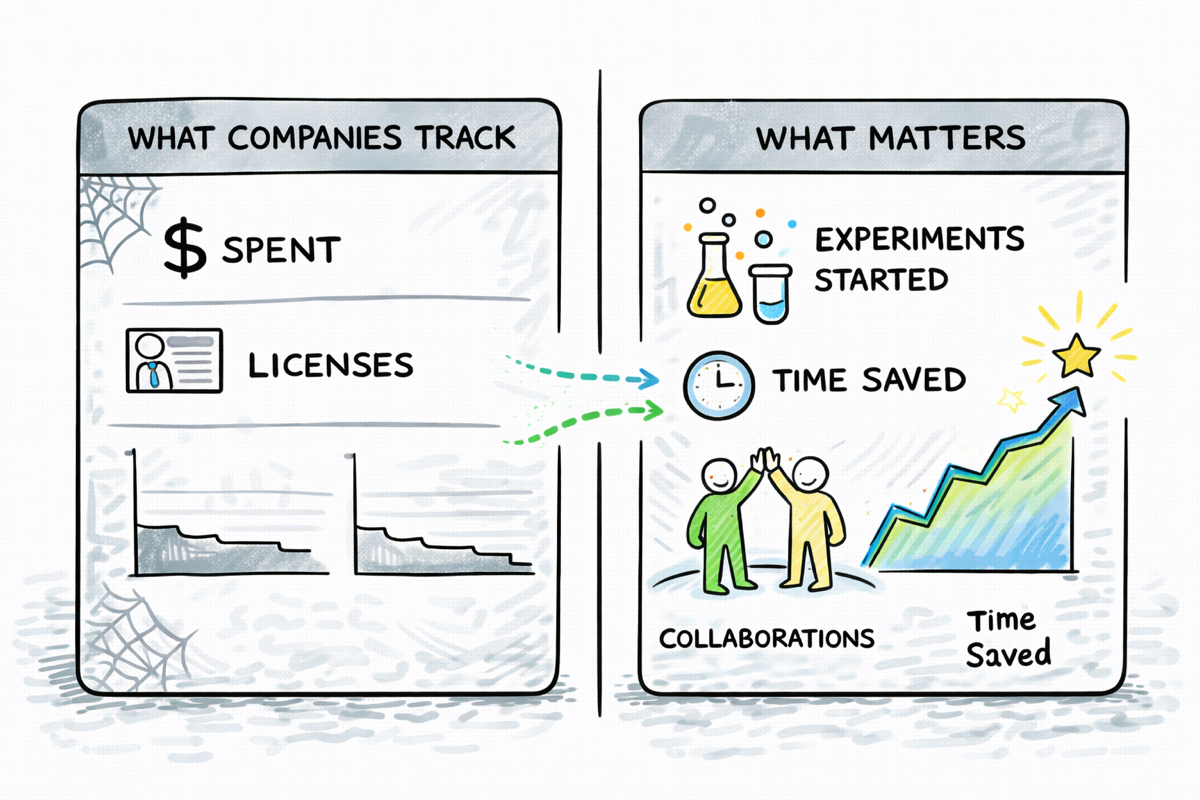
Most companies carefully track AI spending. Some track license utilization. But very few track the signals that actually indicate transformation is taking root:
• Number of AI experiments people have started (not just the ones that succeeded)
• Tasks or processes that teams have redesigned
• Time people have reclaimed from heads-down work
• New capabilities employees have developed
• Cross-department collaborations that AI has enabled
Make these visible across the organization. Not for surveillance or evaluation, but for inspiration and learning. When finance discovers an AI workflow that saves 10 hours a week, sales should see it and think 'I wonder if we could adapt that idea for our proposal process?'
Build a Culture of Recognition and Sharing
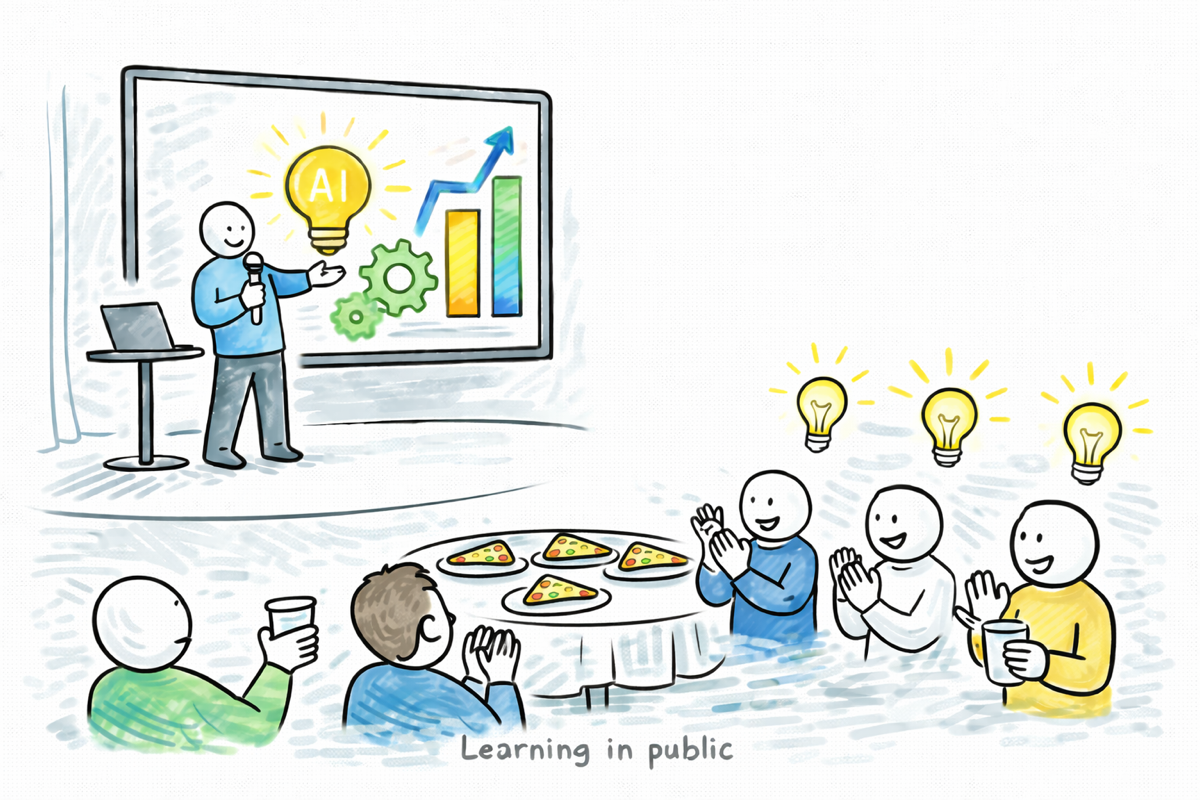
Culture change requires both repetition and social proof. If AI adoption happens quietly in isolated pockets, that's where it stays.
Hold regular AI showcase events. Make them feel like genuine celebrations, not formal presentations. Actual show-and-tell where teams demonstrate what they've built. Create an atmosphere of curiosity and appreciation. Pizza, applause, genuine questions about how people figured things out.
Highlight wins in company communications. And not just the impressive, large-scale stuff. Celebrate the accountant who automated expense approvals. The HR person who built an onboarding chatbot. The sales rep who created a custom proposal generator.
When people see their colleagues succeeding with AI and being recognized for it, two things happen naturally: the fear starts to fade, and the FOMO kicks in. That's when adoption begins to accelerate organically.
Give Clear, Explicit Permission
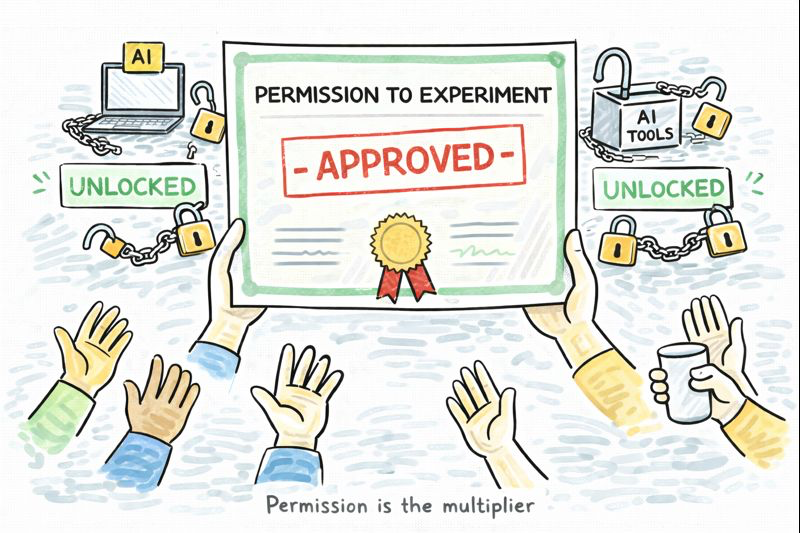
This might seem obvious, but it needs to be said explicitly and repeatedly: 'We want you to experiment with AI. We expect you to try new approaches. Some won't work out, and that's perfectly fine. We'd rather you try and learn than wait for perfect certainty that never comes.'
Many employees are waiting for permission they're not sure will come. Be direct and consistent about it. In all-hands meetings. In department check-ins. In performance review conversations. Make it clear that figuring out how to work smarter (heads up) is just as valued as working harder (heads down).
Making the Shift
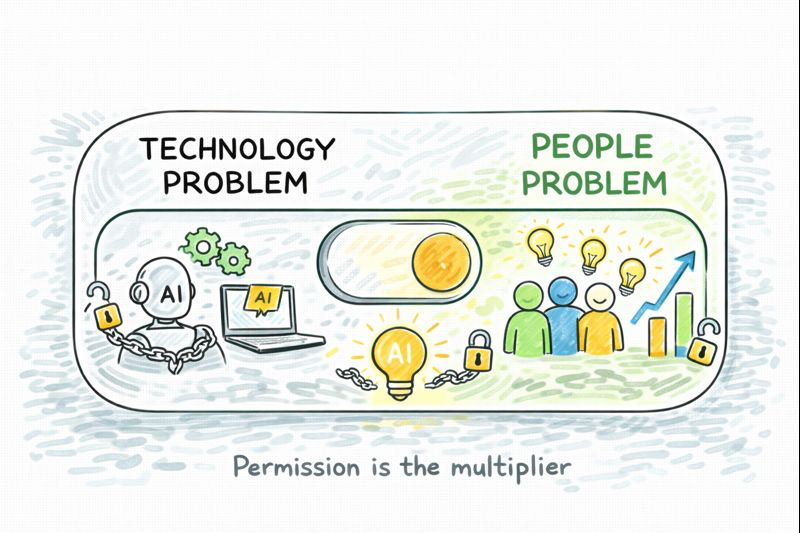
AI adoption isn't a technology challenge that happens to involve people. It's a people challenge that happens to involve technology.
You likely don't need different AI tools. You need to help your people feel confident using the ones you already have. And that won't happen at scale until you address the underlying concerns, create genuine psychological safety, provide hands-on support, and celebrate progress visibly.
The companies pulling ahead right now aren't necessarily the ones spending the most on AI. They're the ones who've figured out how to help their people move from heads down to heads up. They've made the shift from 'we have AI tools' to 'our people are confidently using AI to drive the business forward.'
That's not a subtle difference. In two years, it will likely be the defining difference.
Some of your competitors are figuring this out right now. The question is whether you'll join them.
Sources
• Gallup Workplace Analytics, 'Frequent Use of AI in the Workplace Continued to Rise in Q4' (2025)
• Worklytics, '2025 Benchmarks: What Percentage of Employees Use AI Tools Weekly' (2025)
• ISG, 'State of Enterprise AI Adoption Report 2025'
• MIT research on enterprise GenAI project success rates
• Lewarne, Stephen, 'We're Planning for the Wrong AI Job Disruption,' The Wall Street Journal (2025)
• Elfsight, 'AI Usage Statistics 2025: The Complete Market & Adoption Report'
• Second Talent, 'AI in the Workplace Statistics and Trends for 2026'